
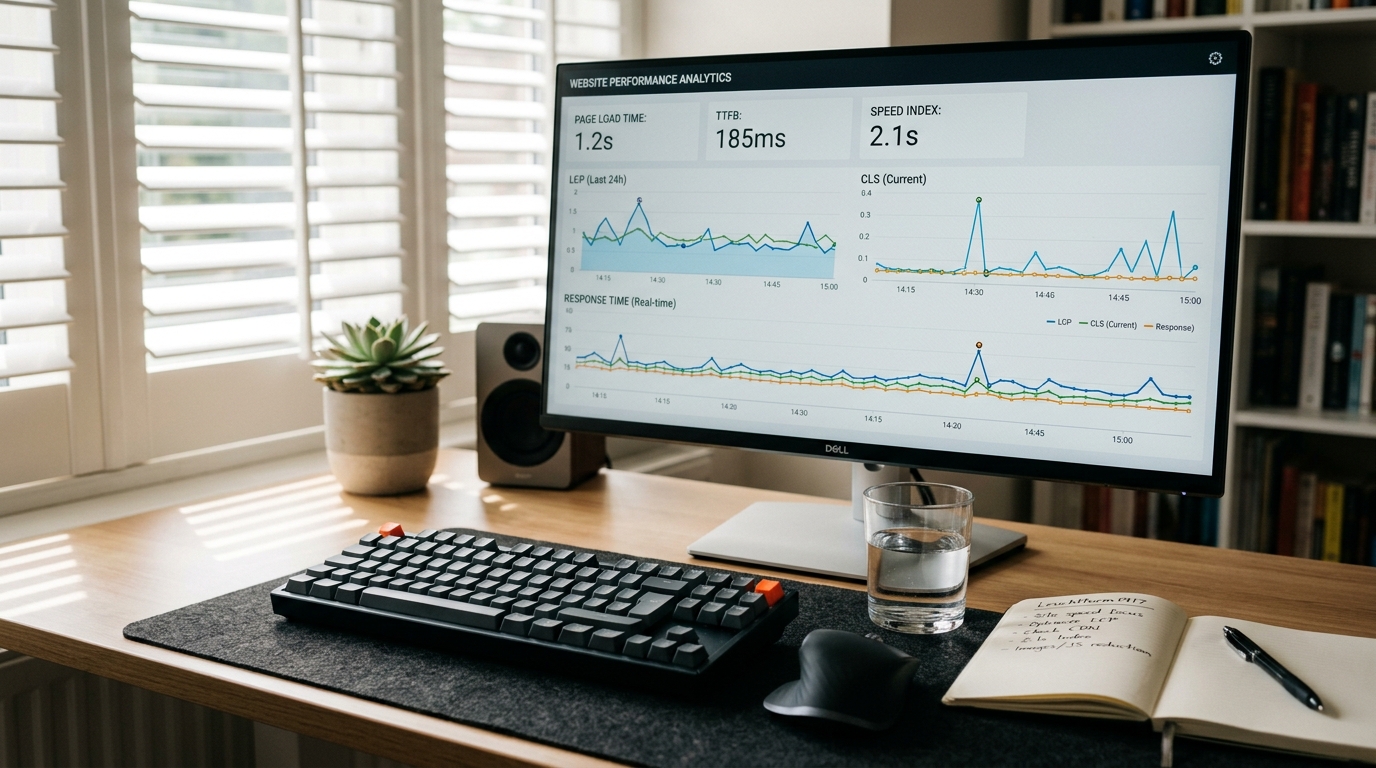
Slow page speed is now a bigger UK Google ranking risk than ever. Learn how Core Web Vitals affect SEO in 2026 and how to fix them, from the Elvantix team.
If your website takes more than a couple of seconds to load, you're not just losing impatient visitors, you're actively losing rankings. Since Google's March 2026 core update, page speed has stopped being a "nice to have" and become a much harder line in the sand. Sites that were technically passing Core Web Vitals six months ago are now failing them, and it's showing up in search positions.
At Elvantix, we work with UK SMEs every day through our custom web development and website design services, and slow load times are consistently one of the first things we flag during a free IT and website audit. This guide breaks down exactly why speed matters so much right now, what Google is actually measuring, and what you can do about it.
Why Speed Became Such a Big Deal in 2026
Site speed has technically been a Google ranking factor since 2010, but for most small business sites, decent content quality was often enough to outweigh a sluggish page. That changed with the March 2026 core update. Google tightened its Largest Contentful Paint (LCP) threshold from 2.5 seconds down to 2.0 seconds, and folded Core Web Vitals into a more prominent composite performance score that now sits alongside content signals rather than behind them.
The impact has been measurable. Pages with an LCP above 2.5 seconds have seen average ranking drops of two to four positions on competitive search terms, and industry data shows pages ranking in position 1 now have a noticeably higher Core Web Vitals pass rate than pages sitting further down page one. In other words, when two competitors have similarly strong content, site speed is increasingly what separates first place from ninth.
"The biggest risk is not taking any risk. In a world that's changing really quickly, the only strategy that is guaranteed to fail is not taking risks."
The Three Metrics Google Actually Measures
Core Web Vitals aren't a vague "does it feel fast" judgement, they're three specific, measurable signals pulled from real Chrome user data, not lab tests:
- Largest Contentful Paint (LCP): how long it takes for the biggest visible element (usually your hero image or main headline) to fully load. The "good" threshold is now under 2.0 seconds.
- Interaction to Next Paint (INP): how quickly your site responds to clicks, taps, and key presses throughout the entire visit, not just the first interaction. This replaced First Input Delay in 2024 and is currently the hardest metric for most sites to pass, with a large share of sites still failing the 200ms threshold.
- Cumulative Layout Shift (CLS): how much your content jumps around while loading (buttons moving as images load in, for example). The good threshold is under 0.1.
Google evaluates all three at once using a rolling window of real-user data, and importantly, it scores them per URL template, meaning one slow product page or blog layout can drag down an otherwise healthy site.
Why This Hits Mobile and Ecommerce Sites Hardest
Mobile traffic now makes up the majority of visits to most UK business websites, and mobile Core Web Vitals carry extra weight in Google's mobile-first indexing. Desktop pass rates on Core Web Vitals currently sit well ahead of mobile pass rates industry-wide, which means a huge number of sites that look "fine" on a desktop review are quietly failing for most of their actual visitors.
This matters even more for online stores. If you run an ecommerce website, the majority of your shopping traffic is arriving on mobile, so a slow product page isn't just an SEO problem, it's a direct hit to conversions. We've written before about why online stores aren't converting, and page speed is very often the root cause sitting underneath cart abandonment, high bounce rates, and poor mobile experience scores.
What's Actually Slowing Your Site Down
In our experience auditing UK business websites, the same handful of issues come up again and again:
- Unoptimised images: large hero banners and product photos that haven't been compressed or served in modern formats.
- Bloated themes and page builders: heavily templated WordPress or drag-and-drop sites loading far more code than the page actually needs.
- Too many third-party scripts: chat widgets, tracking pixels, and plugins all competing to load at once.
- No caching or poor hosting: shared, unmanaged hosting struggling under real traffic.
- Render-blocking code: CSS and JavaScript loading in a way that delays the whole page rather than just the parts that need it.
Interestingly, one recent industry study found WordPress sites using well-optimised themes and proper caching actually scored better on Core Web Vitals than the average site, so the platform itself usually isn't the problem. It's how it's built and maintained that counts.
Beyond SEO: Speed Is Becoming an AI Visibility Signal Too
There's a newer angle worth knowing about. As AI-driven search tools like Google AI Overviews and other AI assistants crawl and summarise the web, faster, cleanly rendered sites are easier for them to process and are more likely to be pulled into AI-generated answers. Speed is no longer just a traditional ranking signal, it's becoming a visibility signal for how often your business gets surfaced in AI search results too.
How to Check and Fix Your Scores
You don't need to be a developer to get a baseline. Google Search Console will show your real-user Core Web Vitals data across your whole site, broken down by page type, and will flag exactly which URLs are failing and on which metric. From there, fixes typically involve image optimisation, reducing third-party scripts, improving hosting and caching, and cleaning up render-blocking code, work we handle as part of our web hosting and maintenance and SEO services.
Because Google uses a rolling window of real-user data, improvements you make today typically show up in Search Console and rankings within four to six weeks, so this isn't a fix that takes forever to prove itself, but it does need to be actioned properly rather than left as a "someday" task.
The Bottom Line
Content quality, backlinks, and topical authority still carry the most weight in Google's algorithm; speed hasn't replaced them. But when two competing UK businesses have similarly good content, Core Web Vitals are increasingly the tiebreaker deciding who lands on page one and who doesn't. If you're not sure where your site currently stands, that's exactly what we check first.
Want a clear picture of where your site is losing rankings to speed? Book a free IT and website audit with Elvantix and we'll show you exactly what's slowing you down, and what it would take to fix it.